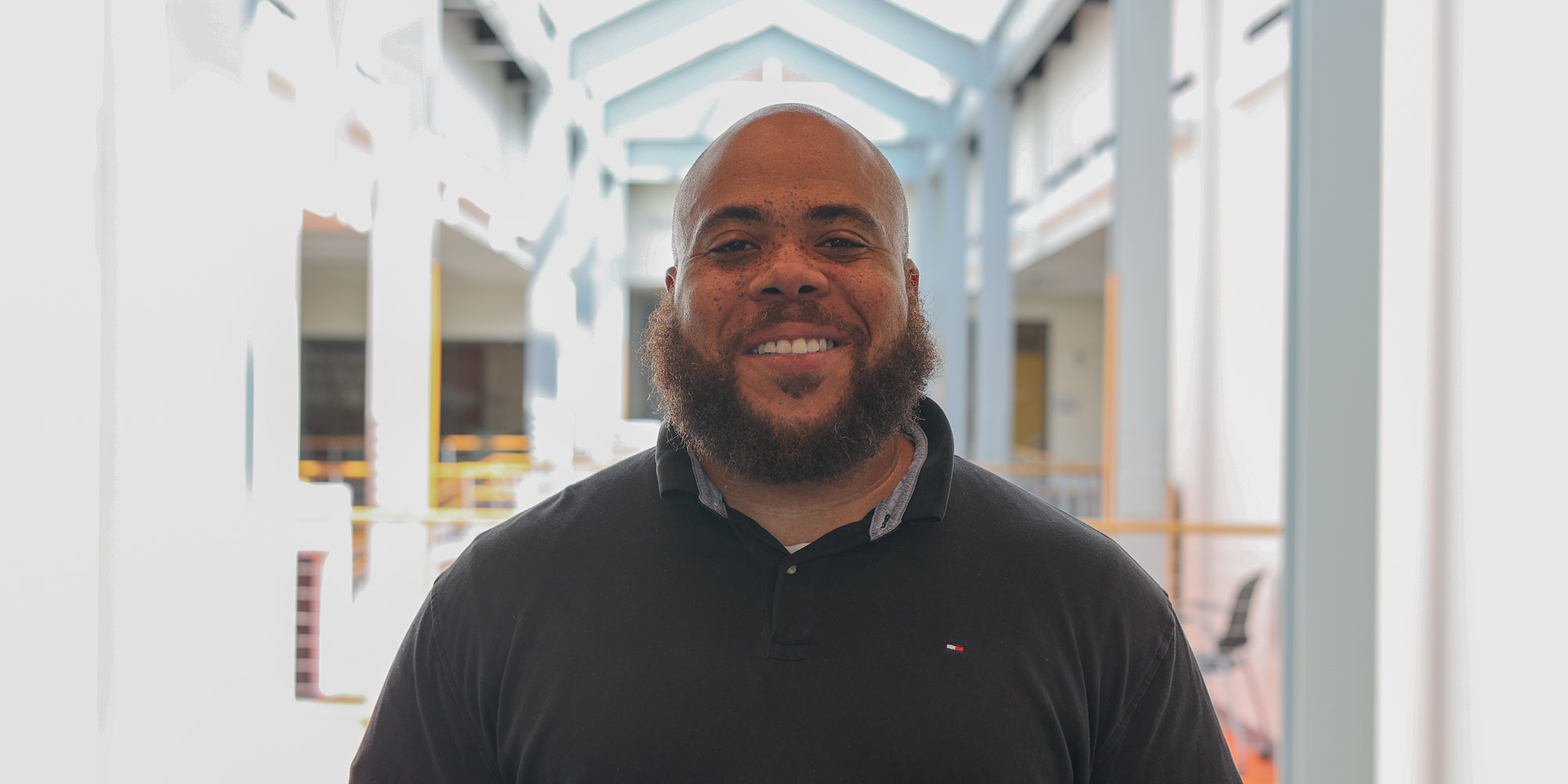
For Vince Ford, M.Div. student at Trinity Lutheran Seminary at Capital University and pastor at the Church of Christ at Genessee Avenue in Columbus's North Linden neighborhood, returning to the classroom isn't just about earning another degree. It's about closing a loop that started with his mother.
"My mom actually got her master's in nursing while I was an undergrad," Ford said. Watching her balance parenthood, ministry-adjacent caregiving and her own education gave him a new appreciation for what she carried. Now, with three kids of his own, a college student, a seventh grader and a third grader, he's living that same balancing act.
"You never stop learning. It just looks different," Ford said.
Ford has spent nearly two decades in church leadership and almost a decade teaching middle school, and the seminary program has clarified where those two paths meet.
"I feel like there's only so much development I can do within my own space," he said of ministry alone. A classroom, he believes, reaches further, and that same drive to reach more people is shaping what he wants to study.
Ask Ford what that looks like, and the answer spills out fast: history, liberation theology and the origins of the systems churches take for granted.
"I'm a history guy," said Ford, whose bachelor's degree is in political science. "I love to learn how we got to where we are."
That curiosity extends to even the smallest details of church life, why do we have pews, why congregations meet at 11 o'clock, and to bigger questions about how those traditions took shape "from a socioeconomic place, a racial place, even geographically."
His research questions are practical as much as academic: How can churches better serve communities that have been marginalized? How can they partner with schools in under-resourced neighborhoods to support kids' education?
"Seminary education is kind of linear, but pastoral service is not," he said, referencing the grandmother suddenly raising a grandchild, the family navigating a divorce, the man whose job loss has upended his sense of identity. Ford wants to see more collaboration across disciplines, seminary alongside psychology, seminary alongside education, to prepare future leaders for that complexity.
"This is ministry," Ford said, "because you're meeting needs beyond the scope of what the job description says on paper."
What keeps him energized, he said, is simple: "Learning grows in value when you have the ability to share it with people."
He's spent years trading reading lists with a pastor friend just to keep learning informally; now he gets to do it in a room with classmates and a professor.
"To have a professor in the classroom, to be able to collectively synthesize that information with other classmates, that's exciting," Ford said.
Ultimately, Ford sees the work as continuous with his calling.
"The best leaders are inclusive leaders," he said. Whether at the pulpit or in front of a lecture hall, that conviction is what he's building toward.