In Columbus, hundreds of voices rise together, unified, filling a space with something that feels bigger than music. There is no single story in that sound. No single background, belief, or path that brought people there. A corporate executive stands beside a college student. A refugee sings next to a lifelong Ohioan. Someone recently released from prison shares a riser with someone who has never known that world at all.
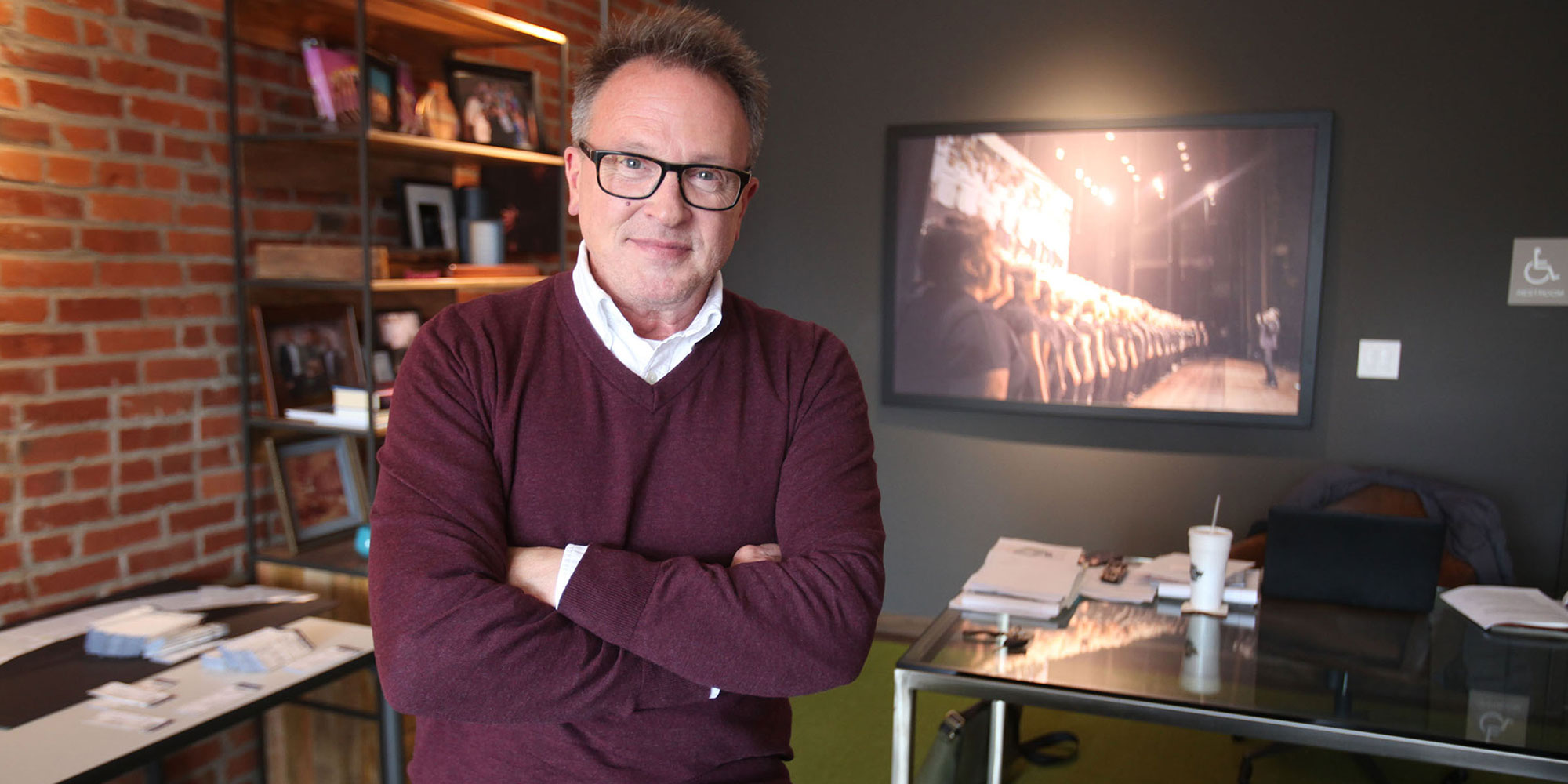
At the center of it all is David Brown, though he’d be the first to tell you it’s not about him.
Long before he became the founder and creative force behind Harmony Project, Brown was a student at Capital University, trying to find his place in a world that didn’t yet have language for everything he was experiencing. His time was marked by struggle, personal trauma, a lack of ADHD understanding, and the weight of expectations he couldn’t meet. At one point, he was asked to leave.
But the turning point did not come from discipline or disappointment. It came from a question. Not “What’s wrong with you?,” a question he had heard too often, but “What happened to you?”
Asked by Craig Arnold, former director of choral activities at Capital, that simple shift unlocked something profound. For Brown, it was the first time someone had invited him to tell his story rather than defend it. The moment stayed with him, reshaping how he would see people for the rest of his life.
“That moment shifted how I think about people and the world around me, especially when it comes to separation and division,” Brown said. “Instead of assuming it’s inherently rooted in racism, anger, or hate, I ask, ‘What happened to lead someone to think this way?’ If something shaped that perspective, then something else has the power to change it. I know that’s possible, because it happened to me.”
Though he eventually returned to Capital to “clean up the mess,” as he puts it, his path didn’t follow a traditional arc. College, at least then, wasn’t where he thrived. But the experience never left him. It lingered as unfinished business, until years later, when life brought him full circle and he watched his sons graduate from Capital in 2021.
Before returning to Columbus, Brown built an extraordinary career in New York. By every traditional measure, he had made it. And yet, something was missing.
That realization came into focus after a series of life-altering experiences, including surviving the aftermath of Hurricane Katrina after moving to New Orleans only three months prior. In the midst of crisis, Brown witnessed the idea that crisis erased division, if only temporarily.
“In the days after the levees broke, we all fled and got out. I didn't understand yet that I was having a trauma response and that I wanted to be around other people who had been through what I had been through,” Brown said.
“I went to this little convention center that was housing several hundred refugees from Katrina, and I knew a lot of those people there. I knew that they did not have the same ideologies, political beliefs, educational backgrounds, or even economic backgrounds, but none of that seemed to matter. Crisis had brought them into a place of cooperation and collaboration, And I started thinking, why is it only crisis that does this? Is there a way to create that kind of connection without it? It felt like such a big, overwhelming idea. How could you ever make something like that happen?”
The answer became Harmony Project.
What started as a small idea, almost an experiment, grew into a nationally recognized model for connection and inclusion. At its core is a simple but radical belief: harmony, in music and in life, only exists when different voices come together. Brown didn’t set out to build just a choir. He built a community.
Launched in Columbus in 2009, Harmony Project reimagines what a choir can be. There are no auditions. No expectation of musical training. The only requirement is a willingness to show up, for each other and for the community.
“Don't worry about trying to do the whole world. Don't worry about trying to save everything. Just focus on a small community. That's where the choir comes in,” said Brown.
“Focus on attracting people to a chorus by promising them an unbelievable musical experience, something they would have never been able to do on their own, introducing them to people they would have never likely connected with or sat next to. The requirement, not musical talent, not musical proficiency, but the idea of we're all working toward a common goal together.”
“And for me, that's what the definition of harmony is: that harmony in music doesn't exist with one note. And harmony in the community doesn't exist with one opinion, one voice, one dominant idea.”
Through its expansive programming, Harmony Project reaches far beyond the stage. It serves students across public, private, charter, and homeschool environments. It creates arts experiences for adults with disabilities and individuals who have experienced homelessness. Its music therapy programs inside Ohio prisons offer incarcerated men and women a rare opportunity to be seen, heard, and valued, not for what they’ve done, but for who they are.
“I was taught that the world is created and it's just going to happen to us. And we don't really have a lot of choice in that, we just have a choice in how we react to it,” said Brown. “I decided that I didn’t want to believe that anymore. Life is a gift, but how it works out is pretty much on us.”
The impact of Harmony Project isn’t just measured in performances or accolades. It’s measured in moments, the hesitation before two strangers speak, the laughter that follows, the realization that the person next to you is not as different as you thought. It’s in the spaces where barriers quietly dissolve.
And for Brown, it’s personal. The student who once felt out of place has built a community where others don’t have to. Not by changing who they are, but by inviting them to stand together.