Conservatory Auditions
Your Music. Your Voice. Your Future.
Your audition is more than an assessment—it’s an opportunity to share your musical preparation, artistry, and potential with the faculty who will help shape your future as a musician.
We look forward to welcoming you to the Conservatory of Music at Capital University for your on-campus audition. After you submit the required documents and complete your audition registration, you will receive a confirmation email with additional information about your audition.
Be sure to review the audition requirements for your area of study before your audition.
Auditioning for the Conservatory of Music
Hear what audition day is really like, straight from current students — and why you have nothing to fear once you walk in the room.
Conservatory Audition Dates
Saturday, November 14, 2026 — Vocal Arts Summit (vocal auditions only)
Saturday, November 21, 2026 — Auditions during Band Fest
Friday, January 22, 2027
Saturday, January 23, 2027
Wednesday, February 10, 2027 — 4 p.m.; evening auditions followed by a concert
Saturday, February 20, 2027
Monday, March 15, 2027
Share Your Music
Your audition will be conducted by faculty in your applied area of study—voice or instrument—and is designed to assess both your current level of preparation and your potential for growth at Capital.
You’ll have the opportunity to perform and participate in a brief conversation with faculty. This is your chance not only to demonstrate your musicianship, but also to share your goals, interests, and experiences as an artist.
At Capital, we believe your musical journey is uniquely yours. Our audition process helps us understand where you are today and how we can help you grow into the musician you’re meant to be.
Composition
Students planning to major in Composition will meet with composition faculty to discuss their musical background and review their portfolio, in addition to completing an instrumental or vocal audition.
Placement Exams
Auditioning students are not required to take placement exams. Theory, listening, and piano placement skills are assessed during the first week of classes after you enroll at Capital University.
Prepare for Your Visit
Approximately two weeks before your audition, we’ll email you a parking pass, campus map, and additional information about audition locations. Your specific audition time will be sent to you a few days before your scheduled audition date.
International Students
If you are applying internationally and are unable to attend an audition in person, please contact Ishan Thapa at ishan.comets@capital.edu to learn about available remote audition opportunities.
Learn from Artists Who Invest in You
Your audition is the beginning of a relationship with the faculty who will mentor, challenge, and support you throughout your time at Capital.
Our accomplished performers, educators, composers, conductors, scholars, and music professionals bring real-world experience, artistic perspective, mentorship, and meaningful professional connections into the studio, classroom, and performance hall.
You’ll receive individualized guidance while collaborating with musicians across disciplines and discovering opportunities to perform, create, teach, and lead. Whether your passion is classical, contemporary, composition, music education, music technology, or another area of study, you’ll be encouraged to develop your unique artistic voice—and prepared to turn your passion into a purposeful career.
Ready to Take the Next Step?
Explore the Audition Requirements for your area of study and prepare to share your music with us.
Can't attend one of the scheduled audition dates or have questions?
Contact Ishan Thapa, Coordinator of Conservatory Recruitment, at 614-236-6435 or ishan.comets@capital.edu.
Audition Requirements
Our instructors are some of the best in the business—and in the classroom. That means you will be learning from people who, quite frankly, have been there, done that. As committed educators, they are prepared to share their knowledge, expertise and contacts so you, too, can orchestrate a career in music, whether your passion is classical, contemporary or somewhere in between.
Instruments
Areas of Interest
Instrument
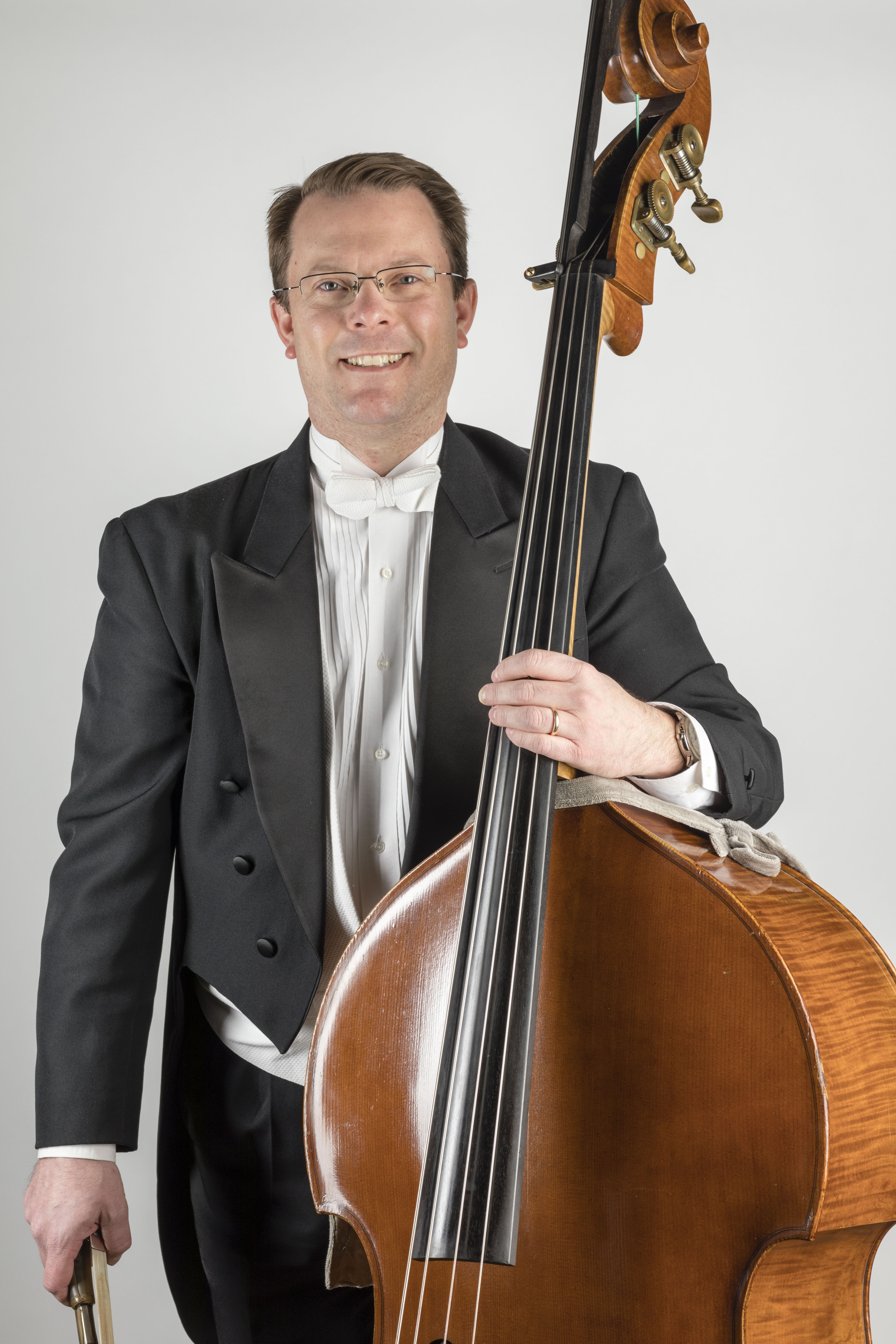
Jim Faulkner
jfaulkner9@capital.edu
Jim Faulkner serves as the assistant principal bass of the West Virginia Symphony, and is a longtime member of the bass section of the Dayton Philharmonic. He is an associate musician with the Columbus Symphony, and formerly held the position of principal bass of the Springfield (OH) Symphony. He has performed with numerous other ensembles, including the Cincinnati Symphony, the Toledo Symphony, Pro Musica Chamber Orchestra, Opera Columbus, the Cincinnati Ballet, and the Columbus Bach Ensemble. The second prize winner of the 1999 International Society of Bassists Orchestral Competition, Jim has been fortunate to share the stage with a diverse variety of artists, ranging from Yo-Yo Ma and John Williams to Vince Gill and Nelly.
As a student of Paul Robinson, he earned a Bachelor of Music degree from the Ohio State University. He received a Master of Music degree while studying with Albert Laszlo at the University of Cincinnati College-Conservatory of Music, where he later pursued additional studies in the Doctor of Musical Arts program.
Jim and his family reside in the Columbus area, where they have lived for the last twenty-four years.
Bass (Classical) Audition Requirements
One solo or movement from a large work such as a sonata or concerto. One etude from any standard technique book. Major and minor scales through four sharps and four flats. Sight-reading.
Questions? jfaulkner9@capital.edu
George DeLancy
gdelancey@capital.edu
George DeLancy is a native of Cambridge, OH, and a student of such prestigious programs as the Columbus Youth Jazz Orchestra and the Michigan State University Jazz Studies Program, where he studied under Rodney Whitaker. He toured nationally and internationally with the Larry Fuller Trio from 2017 to 2019, and has performed as a sideman with bandleaders including Wessell Anderson, Peter Bernstein, Bobby Broom, Tia Fuller, Philip and Winard Harper, Christian Howes, Willie Jones III, Wynton Marsalis, Cécile McLorin Salvant, Russell Malone, Tomoko Omura, Johnny O'Neal, Houston Person, Ben Paterson, Jeremy Pelt, Bria Skonberg, as well as many others in New York and throughout the United States.
He received a commission for a new composition for the Jazz at Lincoln Center Orchestra, entitled "Charles," which was premiered on April 25, 2025 as part of JALC's "Contemporary Jazz Masterpieces" program. He is active nationally as a bandleader and educator, and has worked with programs including Jazz at Lincoln Center's Jazz for Young People, the Jazz Arts Group of Columbus, Christian Howes' Creative Strings Workshop, and Keith Hall's Summer Drum Intensive.
Bass (Jazz) Audition Requirements
Minimum one-octave major scales – all keys. Chromatic scale, minimum two octaves, starting with low F. Walking bass pattern over a 12-bar blues progression in B-flat or F. Two selections must be chosen from the following: "Misty," "Autumn Leaves," "A-Train," "Don't Get Around Much Anymore," "Satin Doll" or "Gone With The Wind." Preparation of the two selections should be as follows: melody, bass line, solo (improvisation) optional. The two selections must be performed in contrasting styles (i.e. walking 4/4 swing style vs. bossa or ballad). The student also must prepare one selection of his or her choice. Sight-reading.
Questions? gdelancey@capital.edu
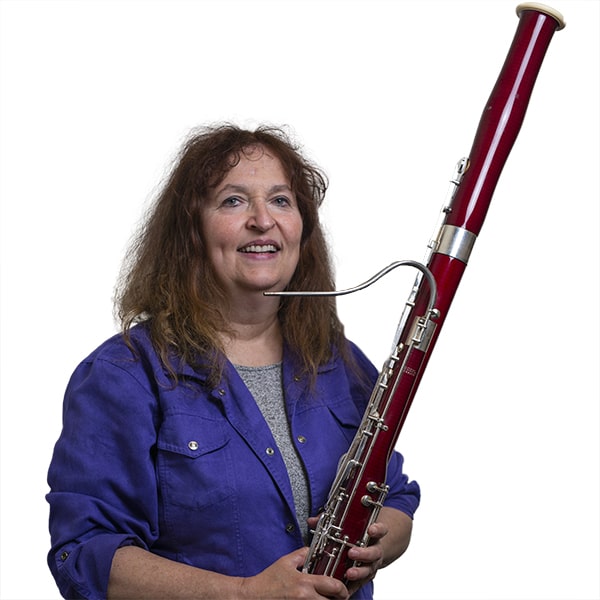
Betsy Sturdevant
bsturdevant@capital.edu
Betsy Sturdevant's extensive teaching and performing career includes her current positions as principal bassoon of the Columbus Symphony Orchestra and bassoon instruction at Capital University. She has also taught at Otterbein University and The Ohio State University, and as a private coach for young bassoonists preparing for auditions.
She has presented recitals and master classes at colleges, festivals and International Double Reed Society conferences throughout the United States. Ms. Sturdevant has participated in summer festivals in Aspen; Spoleto, Italy; Chautauqua, New York and Boulder, Colorado. She has performed as bassoon soloist extensively with the Columbus Symphony Orchestra and also with other orchestras in New York, Indiana and Ohio.
Originally from Johnson City, NY, Ms. Sturdevant began her career at age 15 as second bassoonist with the Binghamton, New York Symphony. While studying with renowned bassoon teacher K. David Van Hoesen at the Eastman School of Music she was a member of the Rochester Philharmonic bassoon section.
Bassoon Audition Requirements
Major scales in all keys, at least 2 octaves. Chromatic scale demonstrating applicant's complete range (preferably at least 3 octaves). Two contrasting solos; possible choices include movements from Mozart, Weber or Vivaldi bassoon concertos or Telemann Sonata in f minor; one of the solos may be an etude from Weissenborn, Milde, Gambaro or equivalent. Sight-reading.
Questions? bsturdevant@capital.edu
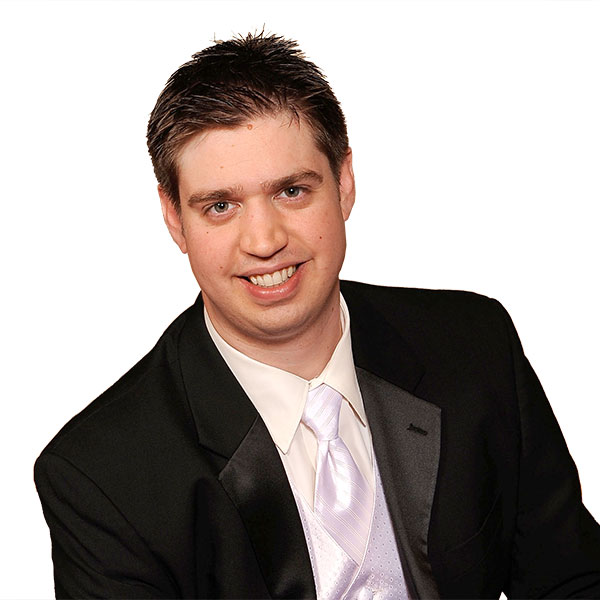
Joseph Mueller
jmueller692@capital.edu
Joseph Mueller has firmly established himself as a virtuosic performer and sought-after instructor in the greater Columbus area. Mr. Mueller was appointed adjunct instructor of cello at Capital University in 2011. In addition to his duties at Capital University, Mr. Mueller is principal cello of the Springfield Symphony Orchestra and section cello in the Newark-Granville Symphony Orchestra.
Mr. Mueller has appeared as soloist with the Capital University/Bexley Community Orchestra, where he is also principal cello.
Mr. Mueller completed a Master of Music degree in Cello Performance from the University of Oklahoma where he held the position of graduate assistant and was a member of the Crouse String Quartet. Mr. Mueller was a member of the Oklahoma City Philharmonic and was principal cello in the Oklahoma University Symphony Orchestra. He also holds a degree in Cello Performance from the Indiana University Jacobs School of Music. His primary teachers have been Emilio Colon, Jonathan Ruck and Sabrina Lackey.
Mr. Mueller has performed master classes for Janos Starker, Lynn Harrell, Andrés Diaz, Helga Winold, Tsuyoshi Tsutsumi, William Preucil, Peter Salaff, and the Cavani String Quartet. Mr. Mueller began his studies at the age of six in the Suzuki method.
Cello Audition Requirements
One solo or movement from a large work such as a sonata or concerto. One etude from any standard technique book. Major and minor scales through four sharps and four flats. Sight-reading.
Questions? jmueller692@capital.edu
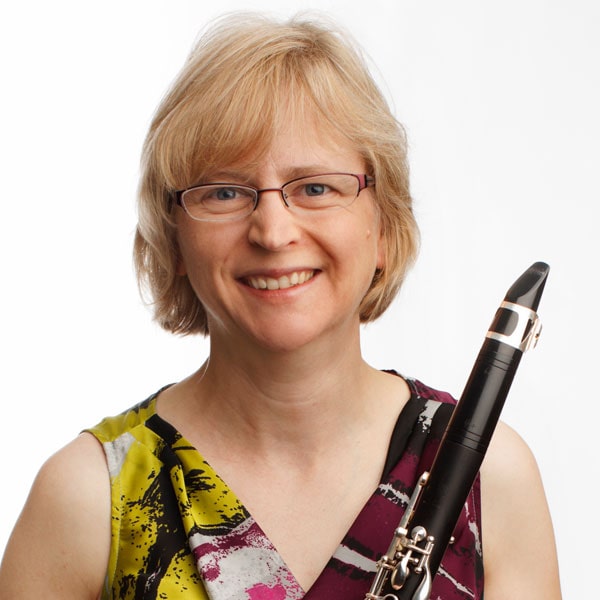
Gail Zugger
gzugger@capital.edu
Hailed in the Milwaukee Sentinel for "hauntingly pure tone and perfect intonation," Gail Lehto Zugger is highly regarded as a clarinetist and teacher. Dr. Zugger joined the faculty in 1999 and also teaches during summers at the International Music Camp near Dunseith, N.D. Dr. Zugger presented a clinic at the 2012 Midwest Clinic in Chicago, and has given clinics at regional and state MENC (now National Association of Music Educators) conferences in Ohio, Illinois, North Carolina, North Dakota, Pennsylvania and more.
Dr. Zugger has appeared as soloist with the Capital University/Bexley Community Orchestra, Westerville Community Band, Westerville Symphony Orchestra and Capital University Symphonic Winds, and performed in recital at the 2012 and 1998 International Clarinet Association ClarinetFest® conferences. She has performed in recital at Grand Valley State University, Western Michigan University, Miami (Ohio) University, Ohio University, Bowling Green State University, Old Dominion University, Eastern Michigan University, and McNeese State University.
With fellow Capital faculty member Dr. Lisa Jelle, Dr. Zugger formed the Inspirare Duo, which recently commissioned and premiered Mark Flugge's Tranquillo e Inspirare for flute, clarinet and jazz piano. She is also a member of the Quintessential Winds, Capital's faculty woodwind quintet.
She can be heard in recording on Thomas Zugger's Dances and Dreams: Recital Music for Trombone on the Mark Records label. Dr. Zugger is currently principal clarinet of the Newark-Granville Symphony Orchestra and second clarinet of the Ashland Symphony Orchestra. She has played with the Columbus, Roanoke, Richmond (Ind.) and Lancaster Festival symphony orchestras.
Originally from Racine, Wisconsin, Dr. Zugger received in 2005 the Graduate of Distinction award from Racine William Horlick High School. She holds degrees from University of Wisconsin—Milwaukee and The Ohio State University. She is a member of the International Clarinet Association and a regular contributor to its quarterly publication, The Clarinet. Her former teachers include James Pyne, Russell Dagon and Jack Snavely.
Clarinet Audition Requirements
Major and chromatic scales in two octaves. One etude from any of the following studies: Melodious and Progressive Studies Book I or II; Rose 32 Etudes; Rose 40 Etudes. A solo piece comparable to the following: Mozart, Concerto K. 622 (movements 1 or 3); von Weber, Concertino; Cavallini, Adagio and Tarantella; Poulenc, Sonata (movements 1 or 3). Sight-reading.
Questions? gzugger@capital.edu
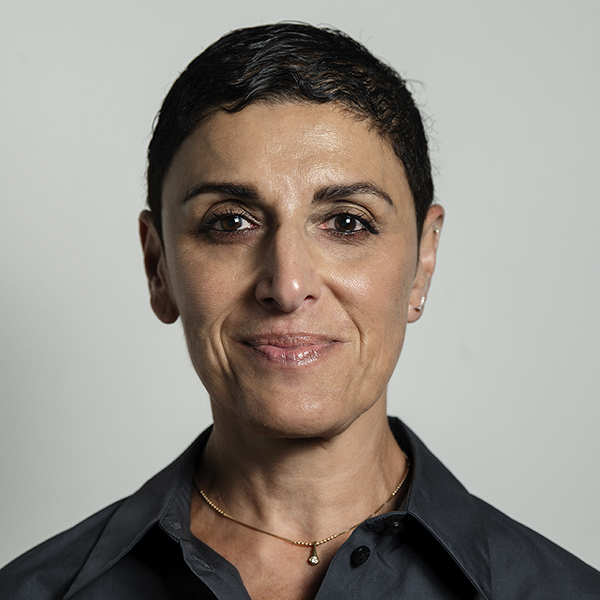
Dina Lentsner
dlentsne@capital.edu
A native of St. Petersburg, Russia, Dr. Dina Lentsner joined the faculty of Conservatory of Music in 2004. As a musicologist, Dr. Lentsner is interested in the intersection of music and literature, primarily focusing on contemporary music. She has been active on the American and international musicological scene as a presenter at numerous international, national, and regional conferences. Her other professional engagements include a three-month research grant at Paul Sacher Foundation — international center for studying 20th century music — and teaching seminars on musico-poetic analysis at the University of Basel (2006) and Estonian Academy of Music (2015). Lentsner's articles, focusing on music of contemporary composers including Hungarian György Kurtág, American George Crumb, and Estonian Lepo Sumera, have been published in musicological journals in France, Hungary, Switzerland, Canada and Georgia.
As a pedagogue, Dr. Lentsner is interested in transforming and improving traditional methods of teaching music classes using Dee Fink's philosophy of "significant learning" through active student engagement. She is a strong supporter and promoter of interdisciplinary projects and undergraduate student scholarship. Under her supervision, music students have presented annually at the Undergraduate Scholarship Symposium as well as at the National Conference of Undergraduate Research. In 2007 National Organization for Women–Capital University recognized Dina Lentsner with the Inspiring Female Teacher Award.
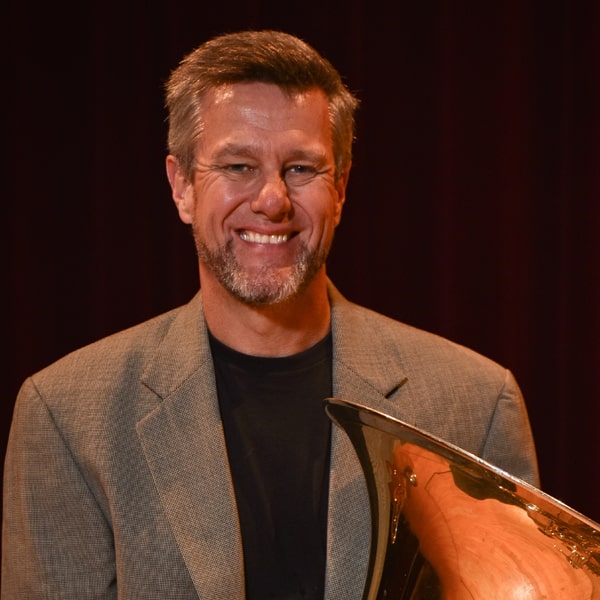
Tony Zilincik
tzilinci@capital.edu
Associate Professor Tony Zilincik teaches tuba as well as composition and theory, and he directs the brass choir and Capital Thunder, the University's tuba/euphonium ensemble. A prolific performer, he plays the tuba in the Central Ohio Symphony Orchestra, the Capital Brass quintet, the Cathedral Brass quintet at St. Joseph Cathedral in Columbus, and directs and coordinates Merry TUBACHRISTMAS Columbus. He is also the E-flat tuba soloist with the Brass Band of Columbus and has performed with the Columbus Symphony Orchestra as well as many touring Broadway shows, such as Annie, The Lion King and Mary Poppins.
Zilincik is known for his commitment to presenting new music in different ways. In 2012, he joined 200 other musicians to perform his very own Tower Thunder in an 80-foot-tall tower at the Olive Ranch in Geyersville, California. In addition to performing and teaching, Zilincik coordinates Capital's New Music Festival, an annual celebration of contemporary composers. Also a prolific composer, his works have received performances in the United States and Europe and many are published by Cimarron Music. Mr. Zilincik is in demand as a tuba and band clinician throughout Ohio and Michigan.
Composition Audition Requirements
Composition applicants must submit a portfolio of representative original compositions, with the expectation of three to four works of contrasting style. Composition majors should submit both their composition portfolio to Ishan Thapa, the Conservatory Admission Counselor, at ithapa@capital.edu, prior to the audition date, and an audition application for their primary instrument. The portfolio should include notated scores of all acoustic compositions (in PDF format) and recorded representations (live performances or computer realizations) of all pieces. In addition to the composition audition/interview, you will be scheduled to audition on your primary instrument.
Questions? dlentsne@capital.edu or mlochsta@capital.edu
Tony Zilincik
tzilinci@capital.edu
Associate Professor Tony Zilincik teaches tuba as well as composition and theory, and he directs the brass choir and Capital Thunder, the University's tuba/euphonium ensemble. A prolific performer, he plays the tuba in the Central Ohio Symphony Orchestra, the Capital Brass quintet, the Cathedral Brass quintet at St. Joseph Cathedral in Columbus, and directs and coordinates Merry TUBACHRISTMAS Columbus. He is also the E-flat tuba soloist with the Brass Band of Columbus and has performed with the Columbus Symphony Orchestra as well as many touring Broadway shows, such as Annie, The Lion King and Mary Poppins.
Zilincik is known for his commitment to presenting new music in different ways. In 2012, he joined 200 other musicians to perform his very own Tower Thunder in an 80-foot-tall tower at the Olive Ranch in Geyersville, California. In addition to performing and teaching, Zilincik coordinates Capital's New Music Festival, an annual celebration of contemporary composers. Also a prolific composer, his works have received performances in the United States and Europe and many are published by Cimarron Music. Mr. Zilincik is in demand as a tuba and band clinician throughout Ohio and Michigan.
Euphonium Audition Requirements
All major and chromatic scales, one octave. One etude from Rochut, Melodious Etudes or Tyrell 40 Progressive Etudes or equivalent, and a solo piece equivalent to or from the following: Blazhevich, Concert Piece No. 5; Barat, Andante and Allegro; Guilmant, Morceau Symphonique. Sight-reading.
Questions? tzilinci@capital.edu
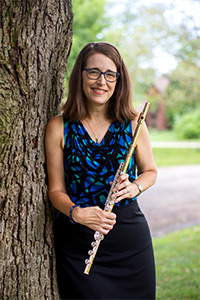
Dr. Lisa Jelle
ljelle@capital.edu
Dr. Lisa Jelle is currently professor of flute at Capital University's Conservatory of Music, where she teaches Applied Flute; Flute Literature; Woodwind Methods; Music Pedagogy; Introduction to Music through the Lives and Music of Bach, Beethoven and Brahms. She also conducts the Flute Choir and coaches Flute Quartet and Woodwind Quintets.
Lisa's latest CD, Bolling & Beyond: Lisa Jelle, Jazz-Inspired Flute. Mark Flugge Remembered, was released in 2019. Other releases are A Chamber Jazz Christmas (2016); Mark Flugge Remembered: Jazz Originals & Standards (2015); and Waltz into Madness (2012). These CDs feature compositions and arrangements by/with her late husband, jazz pianist/composer Mark Flugge, as well as the Inspirare Duo, Capital's QuintEssential Winds, and the PANdemonium4 Flute Quartet. She may be heard as well on the Capstone release Resonant Edges, performing Paul Osterfield's "Jagged Edges" on piccolo, with pianist Diane Frazer.
In 2012–2013 Lisa led a consortium of professional flutists in commissioning and premiering Silver Fantasy for Solo Flute and Symphonic Winds by Dr. Paul Osterfield. Her most recent performances at the National Flute Association's Annual Convention were in Orlando (2018, with Karl F. Kraber and PANdemonium4), Minneapolis (2017, PANdemonium4), and Washington, DC (2015, with Ali Ryerson and the Jazz Flute Big Band). Three recent international performance and teaching tours were in Germany, Hungary, and England.
Dr. Jelle won national auditions for and was a member of the Honolulu Symphony, the Fort Wayne (IN) Philharmonic, and the Austin Symphony. She is currently principal flute of the Ashland Symphony (OH) and the Central Ohio Symphony Orchestra, an associate musician with the Columbus Symphony, and frequently performs with the ProMusica Chamber Orchestra. For more information, or to hear her music, visit her personal website, www.lisajelle.com.
Flute Audition Requirements
Two-octave major scales and arpeggios, all keys; three-octaves for C and chromatic. Two contrasting solos from different style periods. Possible solos from various periods are Bach, Handel or Telemann sonatas or suites (Baroque); Mozart, Quantz or Stamitz concerti (classical); Chaminade Concertino, Faure Fantasie, Poulenc Sonata, Doppler Fantasie (Romantic); the Debussy Syrinx, Hindemith Sonata, works by Muczynski or Hoover (contemporary). Sight-reading. Optional: Minor scales [natural, melodic, and/or harmonic] and arpeggios.
Questions? ljelle@capital.edu
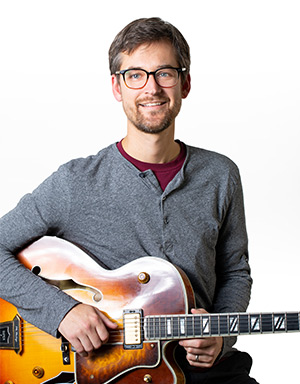
Tom Davis
tdavis@capital.edu
Tom Davis is a faculty member in the Conservatory of Music, where he serves as assistant head of the jazz area, and head of the jazz/contemporary guitar department. He teaches applied jazz/contemporary guitar lessons and popular music classes, as well as leading the Capital University Rock Ensemble (C.U.R.E.), the Jazz Lab Band, and Spectrum (The Capital University faculty jazz ensemble).
Davis performs in a variety of styles as both a bandleader and sideman throughout the US and UK, most regularly with local/regional groups: Vaughn Weister's Famous Jazz Orchestra, The Pete Mills B3 Quartet, Willie Nelson Mandela, Flogo Shaggins, Ray Massa's Eurorhythms, Melanie A. Davis & the Madness, and several others. While living in Edinburgh, Davis toured with top bands and performers in a variety of styles including award-winning jazz musicians Ali Affleck, Brian Kellock, and Dick Lee. Davis has recorded extensively with artists in the US and UK, including albums by Ali Affleck, Dick Lee's Swingtet, Melanie A. Davis, Pete Mills, Flogo Shaggins, and Vaughn Weister's Famous Jazz Orchestra.
Tom earned an MMus in Musicology from The University of Edinburgh in 2011, and a BM in Jazz Studies from Capital University in 2006, where he studied guitar with Stan Smith.
Guitar Audition Requirements
Our guitar studio is open to anyone on campus, and we celebrate musical diversity by exploring all genres and styles with our students and ensembles. Students auditioning for the guitar studio as a B.M. major will need to prepare for the following items:
Two pieces in any style
At least 1 (one) must be unaccompanied — e.g., playing a solo guitar arrangement of a jazz standard, classical piece, rock/pop/indie playthrough of a song's guitar parts. The other can be played using a backing track or other form of accompaniment — e.g., playing melody and improvising over a jazz standard, funk song, blues progression.
Note: Demonstrating improvisation in your performances is not required, but strongly encouraged if you have experience in that area.
Major Scales
Be prepared to play one or two octave major scales with two different fingerings in at least 2 (two) keys of your choosing. Faculty may request additional keys or fingerings if appropriate.
Chord Recognition
Be prepared to demonstrate your knowledge of chords and voicings. Familiarity with all open chord shapes and basic barre positions is expected. You may demonstrate knowledge of 7th chords, shell voicings, or more advanced options if appropriate.
Sight Reading
During the audition you will sight-read melodies and rhythms on the guitar. These melodies will range in difficulty, but you can expect to find them playable in the open position notes in keys like C, G, and F.
Brief Interview
We want to get to know you! We will ask questions like: Why are you interested in pursuing music at the collegiate level? What are your own short and long term goals with guitar? What ensemble and performance experience do you have? Above all, we want to see your artistry, passion, and get an idea of your aptitude for success.
Questions? tdavis@capital.edu
Faculty Information Coming Soon!
Harp Audition Requirements
Major and minor scales in all keys. Two contrasting solos and two orchestral excerpts preferable, including one cadenza, e.g. "Nutcracker," "Swan Lake" or Britten's "Young Person's Guide to the Orchestra." Sight-reading.
Questions? admission@capital.edu
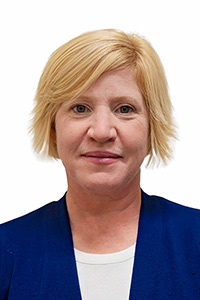
Kim McCann
kmccann3@capital.edu
Kimberly McCann earned a Bachelor of Music Degree from Wheaton College Conservatory of Music in Wheaton, Illinois. She went on to earn a Masters Degree in Horn Performance from Northwestern University, where she studied with Dale Clevenger. During her studies in the Chicago area, she played with numerous off-Broadway productions and local symphony orchestras, including Chicago's Classical Symphony. Since moving to the Columbus area nearly 15 years ago, Ms. McCann has become a desired teacher and performer in Central Ohio. She is principal horn in the Newark Granville Symphony, Westerville Symphony Orchestra, and WindWorks chamber winds. She has been featured as a soloist with the Newark Granville Symphony, the Westerville Symphony, and the Knox County Symphony. In November 2008, Kimberly appeared with WindWorks as a soloist, premiering Beethoven's Horn Sonata as arranged for solo horn and wind accompaniment. She has also made appearances with the West Virginia Symphony Orchestra as an offstage soloist, and Mannheim Steamroller.
Horn Audition Requirements
All major and chromatic scales, one octave. Major arpeggios, legato and articulated. Two contrasting etudes from Kopprasch, Alphonse, Gallay or a comparable etude of the student's choice. One solo movement from a concerto or sonata by Mozart, Franz Strauss, Richard Strauss, Hindemith or Heiden or a solo of comparable difficulty. Sight-reading.
Questions? kmccann3@capital.edu
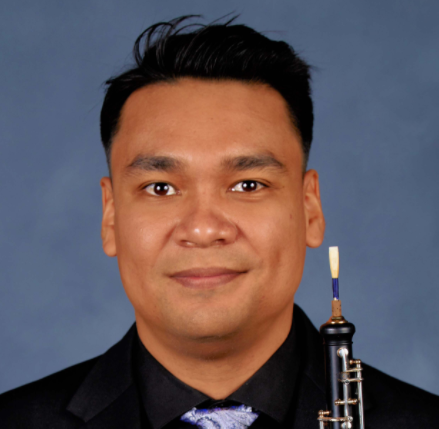
Hugo Souza
hshinlimadesouza@capital.edu
Hugo Souza has been performing with the Columbus Symphony Orchestra since the 2019–20 season. The 2021–22 season was his first year as Principal Oboe. Hugo has performed extensively throughout Brazil, North America, and Europe as a soloist, chamber musician, and orchestral player. Prior to the start of the COVID-19 pandemic, he had the honor of performing with the Orpheus Chamber Orchestra at Carnegie Hall, as a guest artist at Music@Menlo, and with the ensemble Pentaèdre in Montreal. He also has performed with the American Ballet Theatre and American Symphony Orchestra.
Born into a musical family in Natal, Brazil, he began playing oboe at age fourteen and immediately fell in love. He went on to earn his bachelor's degree in oboe performance at the Universidade Federal do Rio Grande do Norte (UFRN), where both of his parents serve as faculty in the music department.
Hugo continued his studies in the United States, earning his Master of Music from SUNY Purchase as a student of Maestro Humbert Lucarelli. He is a doctoral candidate at the Eastman School of Music at the University of Rochester, where he studies with Richard Killmer.
During his time at Eastman, Hugo took a leave to accept a teaching position at his alma mater in Natal (UFRN). While on faculty at UFRN, he played an integral role in raising the oboe's visibility and popularity throughout the country. He co-founded the Brazilian Double Reed Society, which has since held major international conferences featuring masterclasses with world renowned double reed artists.
Hugo is on faculty at Capital University's Conservatory of Music. He resides in Columbus, where he enjoys spending time with his wife and son, exploring the surrounding culinary scene, and creating fusion recipes.
Oboe Audition Requirements
Major and minor scales in two octaves. A study from one of the following or equivalent: Barret, Melodious Studies; Ferling, 48 Famous Studies; Sellner, Progressive Studies. A solo piece from the following or the equivalent: Handel, Sonata No. 1 or Concerto No. 2 in B-flat; Emil Paladilhe, Solo De Concert; Haydn, Concerto in C. Sight-reading.
Questions? hshinlimadesouza@capital.edu
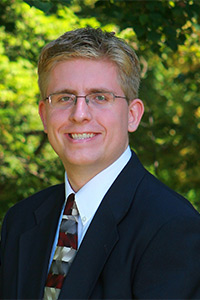
Chad Baker
cbaker@capital.edu
Chad D. Baker currently serves as the Director of Worship & Music at Christ Lutheran Church in Bexley, Ohio. As a faculty member of the Capital University Conservatory of Music and Trinity Lutheran Seminary his assignments have included teaching organ, piano and class keyboard as well as serving as an accompanist for the vocal area and assisting with weekly Chapel services as University Organist. Baker also serves as an accompanist for the Columbus Children's Choir where he accompanies the New World Singers.
Publications include articles in The American Music Teacher and Keyboard Companion. He was also a contributing arranger to three volumes of Evangelical Lutheran Worship: Alternate Introductions and Accompaniments for Organ published by Augsburg Fortress in 2008.
Baker is a 2004 cum laude graduate of Capital University with a bachelor of music degree in keyboard pedagogy with an emphasis in church music. During his tenure as a student at Capital Baker studied organ with Janet Linker and piano and piano pedagogy with Dr. Rebecca Johnson. Additional study has been with James Hildreth, Michael Murray, Mary Craig Powell, Joan Seaton, Phyllis Warner and Todd Wilson.
Organ Audition Requirements
A minimum of two selections (three preferred) of contrasting styles or periods. One from the following or the equivalent: Prelude in G Minor, Prelude in F Major from J.S. Bach Eight Little Preludes and Fugues. Sight-read one hymn. Applicants who have not previously studied organ should play a Bach two-part invention or a comparable piece on the piano.
Questions? cbaker@capital.edu
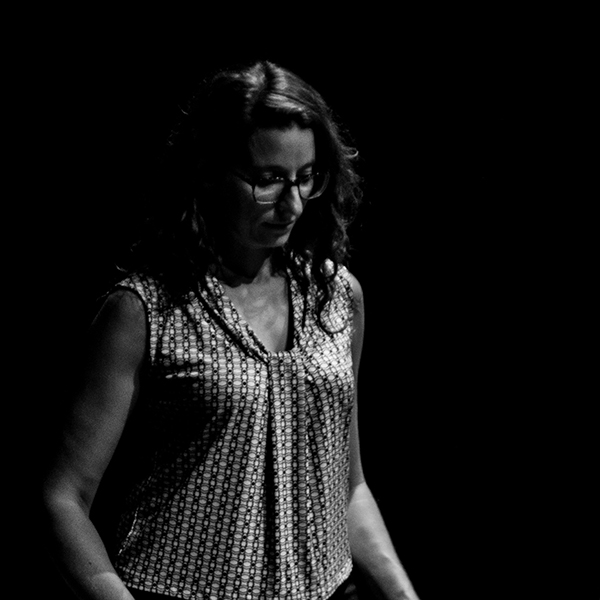
Julie Licata
jlicata@capital.edu
Julie Licata, percussionist / drummer / noisemaker / collaborator / educator, is most passionate about performing chamber music, free improvisation, and integrating acoustic percussion with audio processing. She also regularly presents solo recitals and performs in orchestras, theater pits, and bands of many genres.
Julie has been performing with flautist Ana Laura González as part of Windstruck Duo since 2018. Together they aim to stretch their instruments' idiomatic worlds and promote a diverse range of composers. The duo has recently presented at the National Association of College Wind and Percussion Instructors, the College Music Society Southern Regional Conference, and the 10th Annual Flute Festival of Junín, Argentina. They released their first album of flute and percussion music, Reciprocity, in Fall 2022. She also recently released an album, resound/unsound, with co-creators Andris Balins and Brett Masteller, that features percussive improvisations with time lag accumulation, feedback looping, and modular synthesis.
As an educator, Julie strives to cultivate musicians' creative voices and personal agency through improvisation, self-assessment, and peer feedback. She is an active participant in the Percussive Arts Society, having served as new literature reviewer for the Percussive Notes journal and as a member of the PAS University Pedagogy Committee and Diversity Alliance. Julie is also a member of the Black Swamp Percussion Educator Network and is the Secretary/Treasurer and recent Interim President of the PAS New York Chapter.
Percussion Audition Requirements
Auditioning students must show competency in at least three of the following six areas:
Snare drum – perform a rudimental or orchestral snare solo
Keyboard percussion – perform a 2-, 3-, or 4-mallet solo on any keyboard percussion instrument, or show technical competency through chordal/modal improvisation
Timpani – perform solo, etude, or excerpt
Multi-percussion – perform solo or etude
Drumset – perform basic styles (i.e. swing, Latin, rock, funk, etc.), including fills and short improvisations (trading fours or free improvisation); you may also choose to demonstrate competency by playing with play-along tracks
African, Latin, Caribbean, South American Percussion (hand percussion) – perform various rhythms/styles (e.g. tumbao, guanguanco, kuku, merengue, mambo, etc.), including fills and short improvisations (trading fours or free improvisation); you may also choose to demonstrate competency by playing with play-along tracks
*Solos or etudes on any instrument listed above should be at least OMEA Contest Level B; Contest Level A is preferred for non-conditional acceptance. See the current OMEA lists.
Additional requirements for audition:
Sight-reading on the instruments you are auditioning
Basic rudiments/techniques
for snare/drumset: 13 essential rudiments
for mallets: 12 major scales and arpeggios (2 octaves up and down)
for timpani: interval tuning
for hand percussion: basic techniques (various tones, etc.)
The auditioning student must supply all sticks and mallets, as well as TWO copies of all music to be performed at the audition. Large instruments (drum set, timpani, mallet instruments, snare drum, etc.) will be supplied; students are encouraged to bring any small equipment they feel is necessary to enhance their performance.
Questions? jlicata@capital.edu
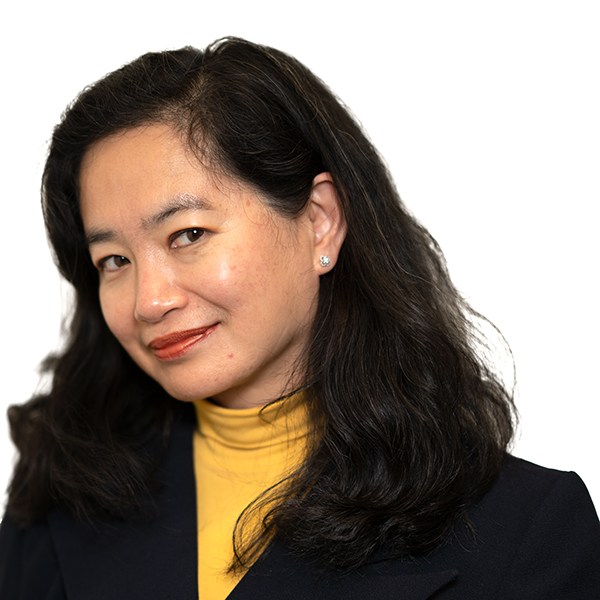
Tianshu Wang, D.M.A.
twang@capital.edu
As professor of Piano and head of the keyboard area, Dr. Tianshu Wang won the prestigious Praestantia Award for Distinguished Teaching in 2011, which is the University's highest honor, and in 2017, she was the recipient of the Faculty Scholarship award. She has been featured in a cover story of the Capital Magazine, "Crossing the Musical Boarders." She also is a Steinway Artist, a privilege extended to the world's most distinguished pianists. Other Steinway Artists include Billy Joel, Michael Feinstein and Lang Lang.
An active performer, Dr. Wang has given recitals in the world's most famous concert halls, such as Carnegie Hall in New York City and the Royal Concert Hall in Copenhagen, Denmark. Her performances were seen on China's National TV and in many cities in this country and throughout Asia. In addition to teaching at the Capital Conservatory of Music, Dr. Wang is a professor of the Euro Arts Academy based in Berlin, Germany, where she teaches in the summer and gives online masterclasses year round. From 2002 to 2016, she was the Dean of Piano School at Shenyang Conservatory of Music in China. Prior to Capital, she served on the piano faculty of Sweet Briar College in Virginia.
Dr. Wang's solo album entitled Piano in China appeared on the cover of the Fanfare magazine, and received enthusiastic reviews. Other recordings include CD albums Born to be Mild (Albany) and Dances and Dreams (Mark). She holds degrees from the University of Arizona (M.M. and D.M.A. in Piano Performance) and the Shanghai Conservatory of Music (B.M. in Piano Performance). Her teachers include Zhu Yafen, who also taught Lang Lang, and Nicholas Zumbro, a student of the legendary Rosina Lhévinne.
Piano Audition Requirements
All major and harmonic minor scales and arpeggios in four octaves. Repertoire from three contrasting styles or periods (Baroque, Classical – one movement from a sonata by Haydn, Mozart, or Beethoven, Romantic or Contemporary). All pieces must be memorized. Sight-reading.
Questions? twang@capital.edu
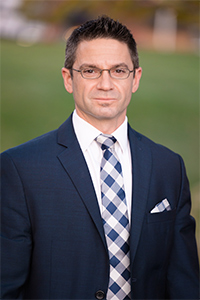
Tony Bonardi
abonardi@capital.edu
Tony Bonardi is an adjunct professor of jazz and contemporary piano at Capital University's Conservatory of Music. He teaches jazz keyboard, class piano, theory, and music software.
As a teenager he cut his teeth performing in Northern Ohio clubs under the tutelage of St. Louis bluesman and Ike Turner alum, Sonny Robertson and studied jazz piano under Pat Pace and Hank Marr among others. Now residing in Columbus, Tony keeps a busy schedule performing with a variety of acts throughout the Midwest.
Just as adept playing salsa and dance music as he is in a jazz environment, he truly brings his diverse, energetic influence to any situation. This energy overflows into the classroom, where he delights in helping students organize the constructs of contemporary piano music and realize their potential. Professor Bonardi holds a B.A. from the Ohio State University (2001) and a M.M.E from Capital University (2016).
Jazz Piano Audition Requirements
Major and minor scales, hands together in four octaves. Ability to play a prepared melody and accompaniment for two contrasting selections in the popular/jazz idiom. Realization of popular/jazz chord progressions at sight. Any prepared classical literature. Demonstrate improvisational skills.
Questions? abonardi@capital.edu
Billy Wolfe
wwolfe@capital.edu
Born and raised north of Chicago in Mundelein, Illinois, Billy Wolfe has performed as a freelance musician throughout the east coast and greater Midwest region for the past two decades. After spending roughly 10 years in the Washington DC metropolitan area, Billy recently moved to Columbus where he can be found performing with a wide array of Ohio musicians. He currently leads the Billy Wolfe Octet and The Tristano School Project as well as co-leading the nine-piece MW9 ensemble with Baltimore-based trumpeter Leo Maxey and the New Orleans trad/funk inspired District Brass alongside David Agee. Billy is also a member of the Bohemian Caverns Jazz Orchestra, Vaughn Wiester's Famous Jazz Orchestra, and the avant-garde quartet, "Team Players".
Billy has had the pleasure of performing alongside many leading practitioners of his craft including Lee Konitz, Phil Woods, Oliver Lake, Charles McPherson, Billy Harper, Richie Cole, Jon Irabagon, Steve Wilson, Jeff Lederer, Caroline Davis, Greg Ward, Oran Etkin, Ralph Alessi, Seneca Black, Marquis Hill, Ryan Keberle, Warren Wolf, Florian Weber, Cory Christiansen, Michael Formanek, Luke Stewart, Matt Ulery, Joe Chambers, Matt Wilson, and Jeff Hamilton. Being attracted to large scale projects, Billy has had the good fortune of having worked with several esteemed large ensemble composers including Miho Hazama, Ethan Iverson, Brian Krock, Elliott Hughes, Nathan Parker Smith, Frank Karlberg, Jihye Lee, Ken Schaphorst, Anna Webber and Angela Morris.
Billy has been a faculty member of the Conservatory of Music since 2023 where he currently serves as the applied saxophone instructor, director of the University Big Band and area head of Jazz Studies.
Saxophone Audition Requirements
Major and chromatic scales, two octaves or full range. Minor scales optional. An OMEA Class A or comparable contest-level solo such as the Maurice Tableaux de Provence, Heiden Solo or Sonata, Creston Sonata, Sonatas by Bach or Handel, Ibert Concertino da camera, etc. Jazz saxophonists may present two contrasting selections (such as medium swing, ballad, straight-eighth, be-bop, etc.) with improvisation, in place of or in addition to the above materials. A play-along CD is recommended for jazz auditions. All wind players will be asked to sight-read as part of the audition.
Questions? wwolfe@capital.edu
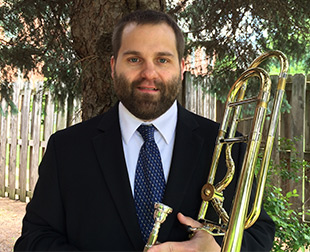
Tony Weikel
tweikel2@capital.edu
Tony Weikel, originally from Buffalo, NY, attended SUNY College at Fredonia where he received a Bachelor of Music degree in Music Education and also obtained a Performer's Certificate. He then attended Duquesne University where he earned his Master of Music degree in trombone performance. After graduation, he spent time freelancing in the greater Pittsburgh area. He then attended Indiana University where he began a Doctorate of Music degree in trombone, and later finished his Doctorate of Musical Arts degree in trombone at Ohio State University.
While in Columbus, Tony has thrived as an educator. He is currently the adjunct trombone instructor at Capital University, and adjunct low brass instructor at Otterbein University and Cedarville University. He also has a large private studio comprised of students from school districts throughout the greater Columbus area.
Tony is currently second trombone with the Springfield (OH) Symphony and has been playing a consistent substitute role with the Wheeling Symphony for the past five seasons. He has had the privilege of playing with many orchestras during his career, including the Western New York Chamber Orchestra, Pittsburgh Chamber Orchestra, Pittsburgh Opera, Columbus Indiana Philharmonic, Louisville Orchestra, Terre Haute Symphony, Carmel Symphony, Canton Symphony, Columbus Symphony, Ashland Symphony and Richmond (IN) Symphony.
Tony has also had success in a variety of chamber ensembles, and is currently a member of the Village Brass Quintet, Sequenza Trombone Quartet, and Ohio Trombone Quartet. Tony has been extremely fortunate to study with many fine trombonists, including Barry Kilpatrick, Carl Mazzio, Scott Parkinson, Pete Sullivan, Peter Ellefson, and Joe Duchi.
Trombone Audition Requirements
All major and chromatic scales. One etude from Rochut, Melodious Etudes, Book 1; or Tyrell, Blume, Kopprasch or equivalent and a contrasting solo composition equivalent to Barat, Andante and Allegro; Guilmant, Morceau Symphonique; Rimsky-Korsakov, Concerto. Jazz trombone players may present two contrasting selections (such as medium swing, ballad, straight-eighth, be-bop, etc.) with improvisation, in place of or in addition to the above materials. A play-along CD is recommended for jazz auditions. All brass players will be asked to sight-read as part of the audition.
Questions? tweikel2@capital.edu
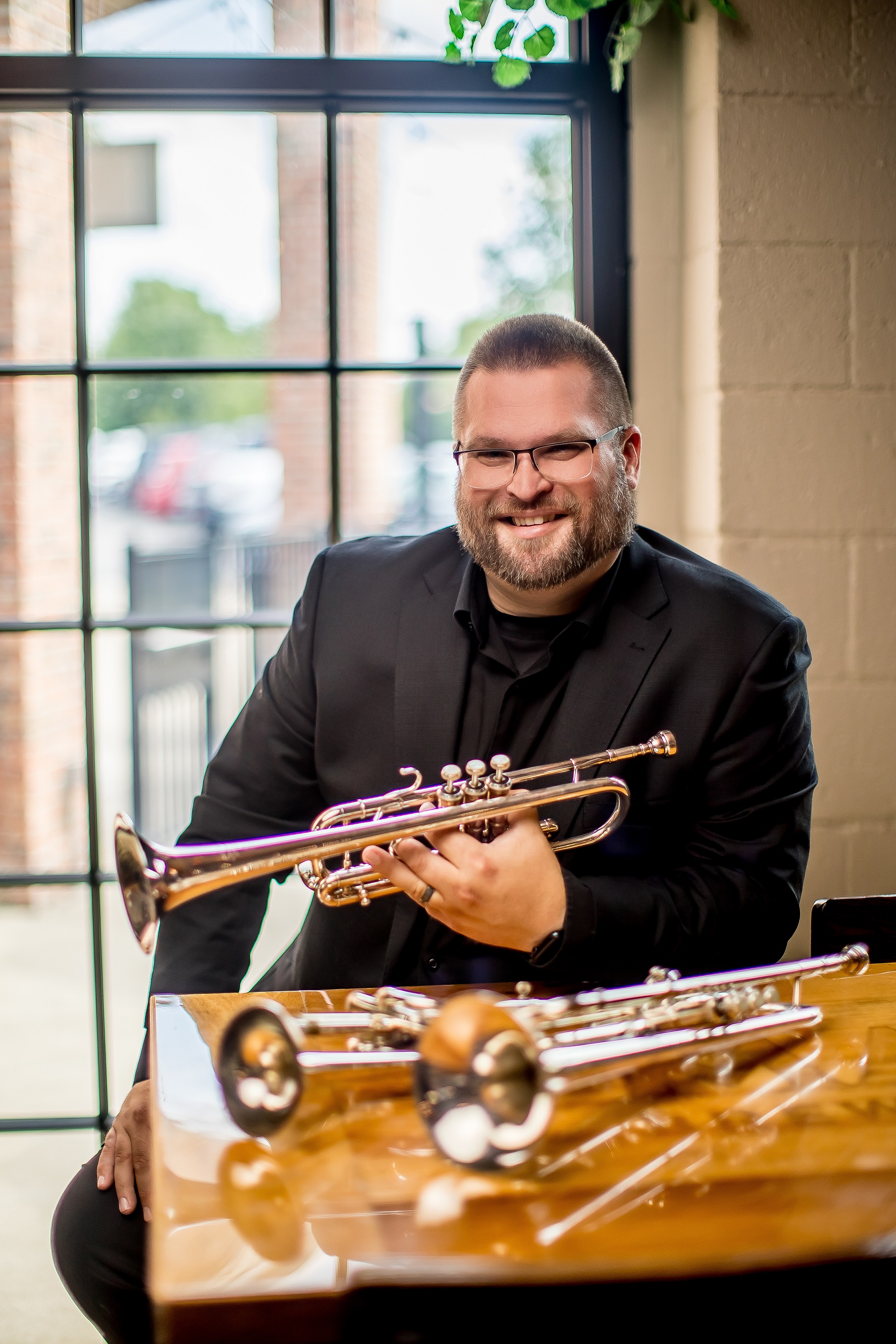
Dr. Lance Witty
lwitty@capital.edu
Dr. Lance Witty serves as Assistant Professor of Music in the Conservatory at Capital University located in Columbus, Ohio. Witty serves as Brass Area Coordinator, oversees the trumpet program, and performs with the Capital faculty chamber and jazz ensembles.
A native Ohioan, Witty has inspired and guided aspiring trumpet players at all skill levels. His students have found success in education, competitions, national and international festivals, professional audition advancements, and gained entrance to continue their studies in some of the finest schools of music in the country.
Living an active professional music career as a performer, educator, adjudicator, and guest lecturer, Witty's career has been dedicated to promoting the excellence of musicians worldwide. As a Yamaha Performing Artist, he is a malleable performer of multiple genres and has performed extensively as a soloist and an orchestral, chamber, and commercial musician.
Prior to his position at Capital University, Witty served as trumpet faculty at Texas Lutheran University, The University of Mary Hardin Baylor, and Texas A&M University-Kingsville. Witty earned his Doctorate of Musical Arts degree at The University of Texas at Austin and received both his Bachelor of Music and Master of Music degrees at Bowling Green State University. Witty's principal trumpet instructors include Ray Sasaki and Charles Saenz. For more information, or to hear him perform, please visit his professional website, www.lancewitty.com.
Trumpet Audition Requirements
All students will be asked to perform major and chromatic scales (preferably two octaves) and one or more compositions of their choice that demonstrates both their technical and lyrical ability. Students wishing to major in Jazz Studies should, in addition to the above materials, present a jazz selection with backing track (such as medium swing, ballad, straight-eighth, be-bop, etc.) with improvisation. All candidates will be given sight-reading and complete a brief personal interview at the audition.
Questions? lwitty@capital.edu
Tony Zilincik
tzilinci@capital.edu
Associate Professor Tony Zilincik teaches tuba as well as composition and theory, and he directs the brass choir and Capital Thunder, the University's tuba/euphonium ensemble. A prolific performer, he plays the tuba in the Central Ohio Symphony Orchestra, the Capital Brass quintet, the Cathedral Brass quintet at St. Joseph Cathedral in Columbus, and directs and coordinates Merry TUBACHRISTMAS Columbus. He is also the E-flat tuba soloist with the Brass Band of Columbus and has performed with the Columbus Symphony Orchestra as well as many touring Broadway shows, such as Annie, The Lion King and Mary Poppins.
Zilincik is known for his commitment to presenting new music in different ways. In 2012, he joined 200 other musicians to perform his very own Tower Thunder in an 80-foot-tall tower at the Olive Ranch in Geyersville, California. In addition to performing and teaching, Zilincik coordinates Capital's New Music Festival, an annual celebration of contemporary composers. Also a prolific composer, his works have received performances in the United States and Europe and many are published by Cimarron Music. Mr. Zilincik is in demand as a tuba and band clinician throughout Ohio and Michigan.
Tuba Audition Requirements
All major and chromatic scales one octave. Two contrasting studies from one of the following or the equivalent: Blazhevich, Grigoriev, Vasiliev, Bordogni, Rochut. A solo piece from the following or the equivalent: Bach/Bell, Air and Bourree; Beversdorf, Sonata for Tuba; Capuzzi/Catilinet, Andante and Rondo; Catozzi, Beelzebub; Nelhybel, Suite. Sight-reading.
Questions? tzilinci@capital.edu
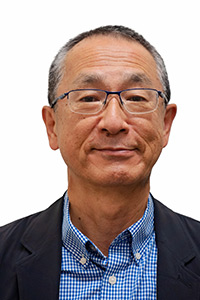
Ken Matsuda
kmatsuda@capital.edu
Violist and native of Japan, Kenichiro Matsuda came to the United States after three and a half years with the New Japan Philharmonic under Seiji Ozawa. He attended Kunitachi Music College in Tokyo and Northern Illinois University in DeKalb, IL., where he received his BM and MM.
Ken was a member of the Grant Park Symphony, Grand Rapids Symphony, and Buffalo Philharmonic (Acting Assistant Principal Violist) before joining the Columbus Symphony Orchestra in 1987. He has also played with the Milwaukee Symphony Orchestra and the Chicago Symphony Orchestra as a regular substitute violist. He has taught viola at Calvin College, Denison University, Ohio University, and Ohio State University, and most recently at the University of Cincinnati College Conservatory of Music (CCM). He is currently an adjunct instructor at Capital University in Bexley, Ohio.
He is the violist of the Cygnus Quartet and plays chamber music actively in central Ohio. He toured Japan (1988) with the Columbus String Quartet as well as in Estonia (1999) with the Sonus Artis Quartet. For over 25 years, he has been the conductor of "Hanamizuki no Kai," the Japanese Women's Chorus in Columbus. Ken was invited to play with The Hiroshima Symphony Orchestra (2018) under Junichi Hirokami to perform Beethoven's Ninth Symphony in Hiroshima, Japan.
His teachers include Nobuko Imai, Jerry Horner, Bernard Zaslav, and Shumel Ashkenazi of the Vermeer Quartet.
Viola Audition Requirements
1) A three-octave scale and arpeggios: choose from the key of D, E-flat, E, and F. 2) A movement from any of Bach's Solo Cello Suites. 3) The first movement of one of the following concertos: J.C. Bach, Hummel Fantasie, Hoffmeister, Stamitz, Bartok, Hindemith, or Walton. Sight-reading.
Questions? kmatsuda@capital.edu
Doug Locke
dlocke@capital.edu
Violin Audition Requirements
One solo or movement from a large work such as a sonata or concerto. One etude from any standard technique book. Major and minor scales through four sharps and four flats. Sight-reading.
Questions? dlocke@capital.edu
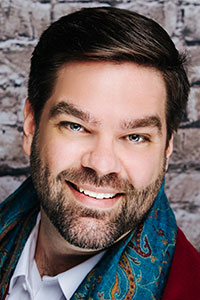
Dr. Chad Payton, Voice Area Head
cpayton@capital.edu
Dr. Chad R. Payton serves as an Associate Professor of Voice and the Associate Dean of Student Success in the Conservatory of Music at Capital University. He is an active guest clinician, presenter, and performer throughout the United States. As a teaching-artist, Dr. Payton strives to enhance his students' confidence, independence, and help them chase their potential in and out of the voice studio. He is honored to have been awarded the 2022 Praestantia Award for Outstanding Teaching and the 2023 Cotterman Award for Outstanding Service to Students. Payton performed his Carnegie Hall, Kennedy Center, and off-Broadway debuts in Michael Ching's Corps of Discovery, sang his Italian chamber music debut at the International ClarinetFest, and sang his Brazilian debut in Orff's Carmina Burana. During the summers, Dr. Payton teaches on the voice faculty at Seagle Festival, the nation's oldest training program in both opera and musical theatre in New York.
Voice Audition Requirements
General Voice Audition Requirements and Information
All song selections must be memorized.
Upon receiving an official academic admission to Capital University, vocal students will submit the following as an audition pre-screen two weeks before their desired audition date:
A pre-audition questionnaire
One song selection
For the pre-screen song, students can utilize free accompaniment tracks online or record this song with a local pianist. The choral excerpt will be a cappella. Instructions for completing these video assessments will be emailed three weeks before the desired audition date.
As you prepare your video submissions, note that we are assessing several factors in your pre-screen audition: preparation, clarity of tone, center of pitch, characterization/interpretation in each song, willingness to communicate and share stories, diction, breath control, and overall music literacy. Following the recording, you will then upload the link to your video to your Capital Status Page to complete the submission.
Download our Vocal Pre-Screening Recording Tips
Students who pass the pre-screen assessment will be invited to a live audition date, where they will:
Sing one additional song
Complete an interview with the faculty
Sight-read one melodic/rhythmic excerpt
A pianist will be provided at the live audition.
Students should select from classical art songs and musical theatre songs from staged productions. Pop songs, contemporary religious songs, or CCM repertoire are not appropriate for entrance auditions. Our voice faculty recommends selecting repertoire from publications such as: Twenty-Four Italian Songs and Arias (Schirmer), Roger Quilter 55 Songs (Hal Leonard), Standard Vocal Literature (Hal Leonard), The First Book of ____ Solos [Soprano, Mezzo Soprano, Tenor, Baritone] (Hal Leonard), The Spirituals of Harry T. Burleigh, and The Singer's Musical Theatre Anthology (Hal Leonard).
Major Specific Voice Audition Requirements
BM Vocal Performance: Two art songs including a foreign language song. Applicants who have an interest in musical theatre could sing one art song in a foreign language and one musical theatre song from a staged production. The student should submit their best song of the two for the pre-screen video.
BM Music Education, Music Industry, Music Technology, Composition, or BA Music: Two art songs, or one art song and one musical theatre song from a staged production. A foreign language selection may be used but is not required. The student should submit their best song of the two for the pre-screen video.
Questions? cpayton@capital.edu
Area of Interest
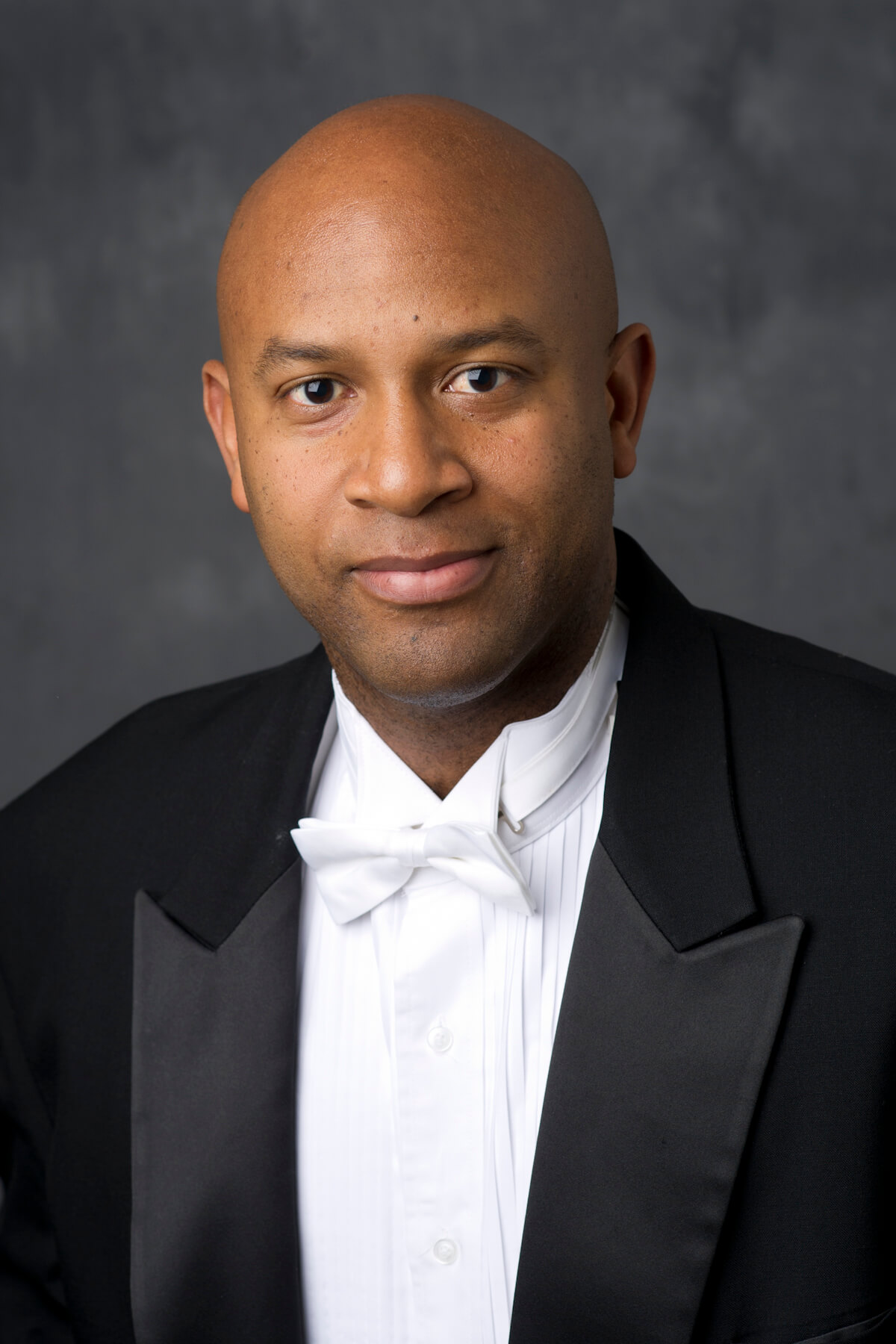
Dr. Ishbah Cox
icox4@capital.edu
Dr. Ishbah Cox is a conductor, educator, and arranger with more than twenty years of university and public school experience. He is excited to join the Capital University Conservatory of Music as Director of Wind Ensembles. Dr. Cox most recently served as the Director of Bands at Olentangy Orange High School in Lewis Center, Ohio. Prior to that appointment, he was an Associate Professor of Bands at Purdue University where he conducted multiple wind bands, and he was one of the assistant directors for the marching band.
Dr. Cox holds a bachelor's degree in music education from Auburn University, in Auburn, Alabama, his master's degree is in music performance from the University of Alabama, in Tuscaloosa, and a Doctor of Arts in Wind Conducting with a secondary specialization in Euphonium Performance from Ball State University, in Muncie, Indiana.
An accomplished arranger for marching and pep bands, Cox currently writes for Hal Leonard Corporation, high schools, and universities, including the Purdue University, Penn State University, The Ohio State University, and the University of Wisconsin marching bands. He has also collaborated with global artists Papa Roach and the Huntertones to adapt their music for performances with marching bands.
Dr. Cox holds professional memberships in the Ohio Music Educators Association (OMEA), National Band Association (NBA), American Society of Composers Authors and Publishers (ASCAP), Kappa Kappa Psi, and the Collegiate Band Directors National Association (CBDNA). He holds Honorary Memberships with both the Gamma Pi Chapter of Kappa Kappa Psi and Beta Sigma Chapter of Tau Beta Sigma (TBS) at Purdue University. He is a member of Phi Beta Mu (Mu Chapter) where he serves on the executive board.
Outside of work, he enjoys spending quality time with his wife Monica, and son Solomon.
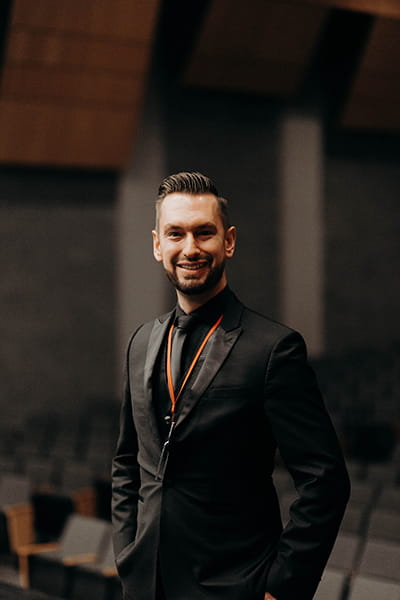
Dr. Adam Potter
apotter22@capital.edu
Dr. Adam Potter has been appointed Director of Choral Activities at the Capital University Conservatory of Music, where he will conduct the renowned Chapel Choir and lead a vibrant and storied choral program while shaping the next generation of conductors, teachers, singers, and artistic leaders. A dynamic conductor, devoted pedagogue, and passionate advocate for transformative music-making, Dr. Potter brings a record of artistic innovation, student-centered teaching, and community engagement that resonates deeply with Capital's mission and legacy.
Dr. Potter is widely recognized for cultivating choral musicianship that is both technically rigorous and profoundly human. His approach centers on empowering students with independent musical skills, confident vocal technique, and a deep sense of ownership over their artistry. In rehearsal and performance alike, he fosters ensemble cultures defined by trust, belonging, and expressive freedom where singers from diverse backgrounds are unified into cohesive communities capable of compelling, meaningful performance.
Prior to his appointment at Capital, Dr. Potter served on the faculty of the University of Missouri School of Music, where he conducted the Concert Chorale and taught undergraduate and graduate coursework in music education, and at Roberts Wesleyan University, where he was Director of Choral Activities and Associate Professor of Music. At Roberts, he revitalized the choral experience through imaginative programming built around cohesive thematic arcs, introducing repertoire that challenged and inspired singers while engaging audiences both on campus and beyond. His ensembles performed at conferences and toured internationally across the United States, Canada, and Europe, earning recognition for their artistry, versatility, and communicative power. Earlier in his career, he distinguished himself as Director of Choral Activities at Delta State University and developed thriving and growing vocal music curricula as Director of Vocal Music at Dansville High School. Across all of his appointments, his students have distinguished themselves through selection to prestigious conducting masterclasses, graduate assistantships, and successful careers as conductors and music educators nationwide.
Dr. Potter began his academic journey under the guidance of Brandon Johnson at Houghton College and continued it at Florida State University, where he earned a PhD in choral conducting and music education while studying with prominent educators Judy Bowers, Kevin Fenton, and André Thomas. His research and teaching interests lie at the intersection of music literacy, vocal pedagogy in ensemble settings, and servant leadership in conducting — an approach that places not only skill-building but also humility, empathy, and relational connection at the heart of artistic excellence.
At Capital, Dr. Potter is eager to build upon the Conservatory's rich choral tradition by expanding opportunities for artistic collaboration, deepening student engagement, and strengthening connections between the university and the broader community. He envisions a choral program that not only achieves the highest levels of musical excellence but also transforms lives, equipping students with the skills, curiosity, and compassion to lead meaningful musical lives wherever their paths may go. The first in his family to attend college, Dr. Potter proudly traces his roots to a family dairy farm in rural Pennsylvania — an upbringing that instilled a lifelong respect for the dignity of hard work, belief in the transformative power of education, and dedication to cultivating meaningful relationships. Beyond the podium, he is an avid traveler, hiker, and wine enthusiast who finds joy in exploring cultures, landscapes, and communities around the world.
Billy Wolfe
wwolfe@capital.edu
Born and raised north of Chicago in Mundelein, Illinois, Billy Wolfe has performed as a freelance musician throughout the east coast and greater Midwest region for the past two decades. After spending roughly 10 years in the Washington DC metropolitan area, Billy recently moved to Columbus where he can be found performing with a wide array of Ohio musicians. He currently leads the Billy Wolfe Octet and The Tristano School Project as well as co-leading the nine-piece MW9 ensemble with Baltimore-based trumpeter Leo Maxey and the New Orleans trad/funk inspired District Brass alongside David Agee. Billy is also a member of the Bohemian Caverns Jazz Orchestra, Vaughn Wiester's Famous Jazz Orchestra, and the avant-garde quartet, "Team Players".
Billy has had the pleasure of performing alongside many leading practitioners of his craft including Lee Konitz, Phil Woods, Oliver Lake, Charles McPherson, Billy Harper, Richie Cole, Jon Irabagon, Steve Wilson, Jeff Lederer, Caroline Davis, Greg Ward, Oran Etkin, Ralph Alessi, Seneca Black, Marquis Hill, Ryan Keberle, Warren Wolf, Florian Weber, Cory Christiansen, Michael Formanek, Luke Stewart, Matt Ulery, Joe Chambers, Matt Wilson, and Jeff Hamilton. Being attracted to large scale projects, Billy has had the good fortune of having worked with several esteemed large ensemble composers including Miho Hazama, Ethan Iverson, Brian Krock, Elliott Hughes, Nathan Parker Smith, Frank Karlberg, Jihye Lee, Ken Schaphorst, Anna Webber and Angela Morris.
Billy has been a faculty member of the conservatory of music since 2023 where he currently serves as the applied saxophone instructor, director of the university big band and area head of jazz studies.
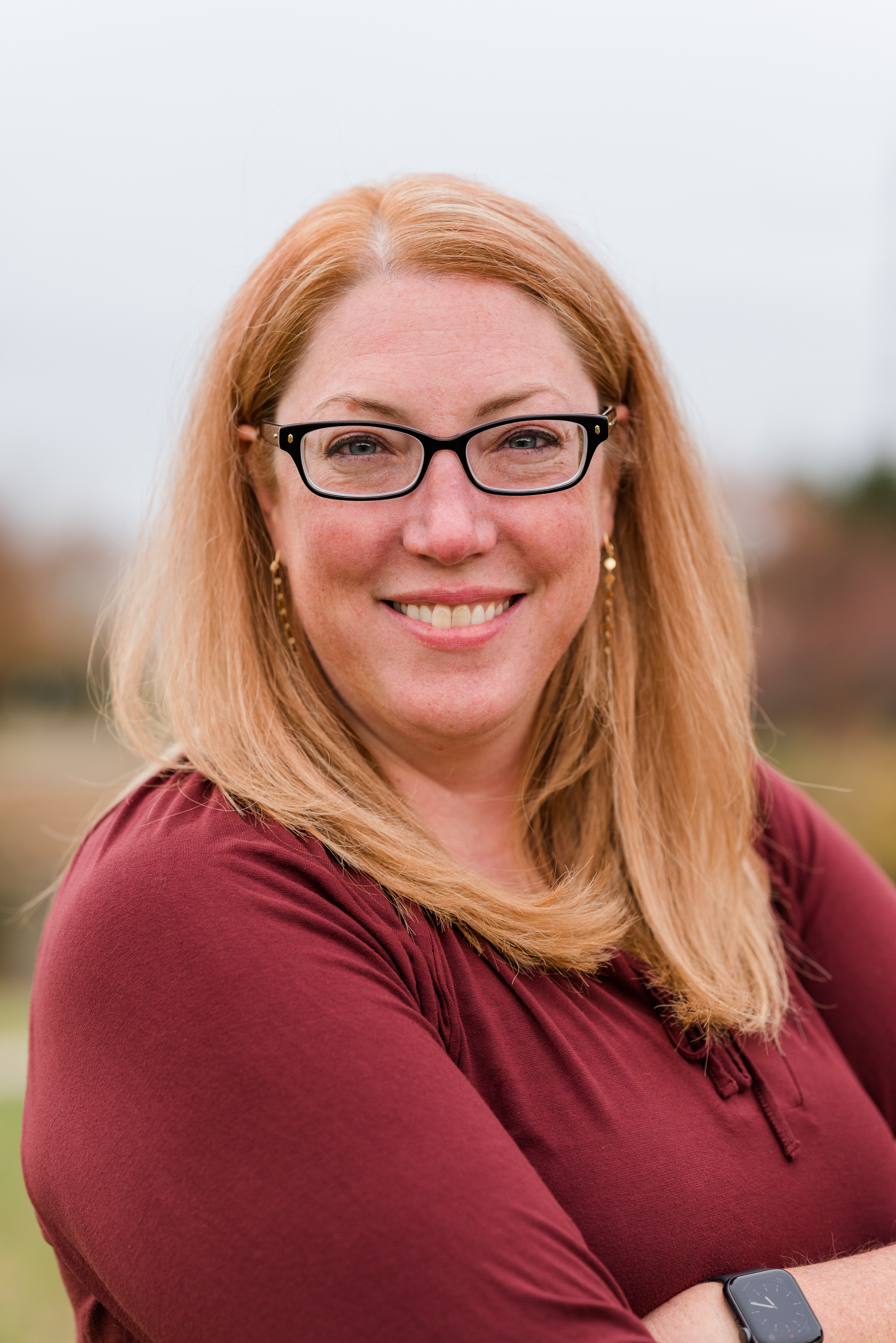
Laura Kitchel
lkitchel@capital.edu
Dr. Laura Kitchel is the Area Head of Music Education and Assistant Professor of Music at Capital University Conservatory of Music where she teaches courses in Music Education, conducts the University Women's Chorus, and oversees and teaches in the Master of Music in Music Education summer program. Previously, she taught high school choir and general music in Kentucky, Missouri, and Ohio.
As a clinician and researcher, Dr. Kitchel has presented at many state and national conferences, including Ohio Music Education Association (2020), the National NAfME in Orlando, Florida (2019), Music Research and Teacher Education National in Atlanta, Georgia (2018) and Missouri Music Education Association (2017).
Dr. Kitchel holds a bachelor's degree in music education from Bowling Green State University and a master's degree in choral conducting from the University of Kentucky and her doctorate in Music Education from the University of Missouri.
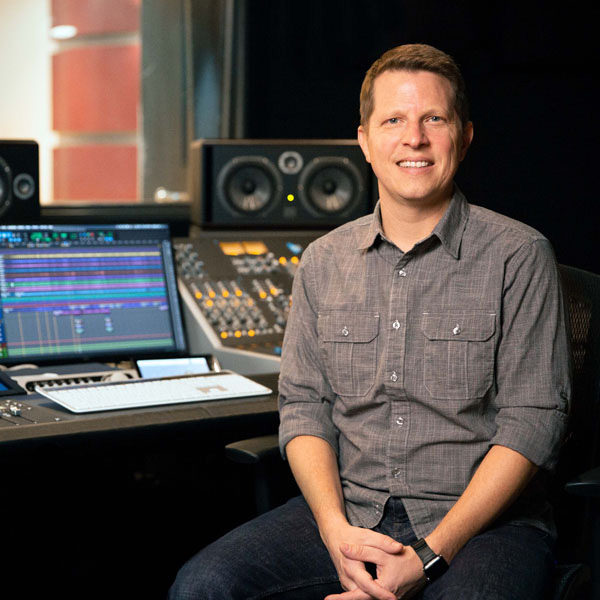
Chad Loughrige
cloughri@capital.edu
Chad Loughrige is passionate about connecting students to professionals in the music technology industry. As head of the Music Technology program at Capital University, he strives to connect his students with experiential learning opportunities, from hands-on recording sessions to student-led workshops and presentations. Chad brings an eclectic set of personal experiences to the classroom. He has performed as a professional drummer for more than 20 years and works as a freelance audio engineer and audio consultant for regional and national artists. With degrees in Music and Instructional Media, Chad Loughrige shares his passion for music, technology and education with his students by staying heavily involved in the music industry and contributing to the pedagogical research of audio education.
Coming Soon
Frequently Asked Questions
This audition is your chance to make a positive impression on the faculty. Dress nicely and professionally.
Allow up to 30 minutes for your audition experience. This time will include asking questions of the faculty and completing the remaining portions of your audition. You will also have opportunities for campus tours, attending a student panel, and lunch if you'd wish to attend those.
Performing an original composition is discouraged on audition day. The faculty in your applied area (instrument or voice) wants to hear what you can do with an already published work, regardless of your major.
NOTE: Composition applicants must submit a portfolio of representative original compositions, with the expectation of three to four works of contrasting style. You will be scheduled for a separate interview with the composition faculty in which to discuss and review these works. Please allow an additional 30-minutes for this interview.
If you are ill the day of your audition and cannot perform to your highest quality, contact Ishan Thapa Conservatory of Music Admission Counselor at ishan.comets@capital.edu to cancel and reschedule your audition. When possible, please provide 24 hours’ notice.
There is no charge for your audition.
If you are doing remote audition, record your video audition with your preferred device. You will be asked to upload your video to YouTube as an unlisted video. You will then upload the link to your video to your Capital Status Page for official submission.